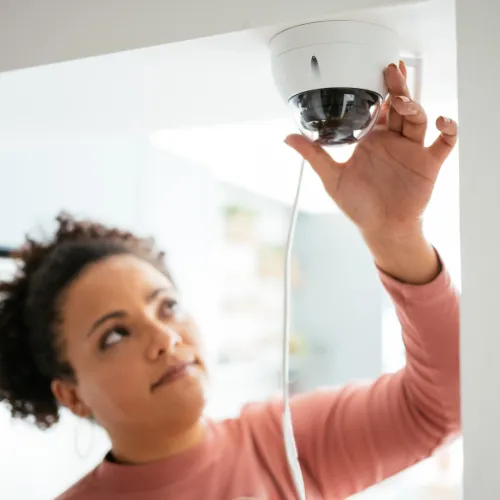
A camera capturing useful evidence in a break-in, vehicle theft, or physical assault can create a sense of justice and comfort for victims. There is footage that can identify the offender and may be used as evidence in court.
Good camera coverage across Alberta communities is possible. It just takes understanding where cameras matter most, what makes them useful, and how to connect residents and businesses with RCMP and law enforcement efforts.
Cameras Can Do Two Things
The conversation around security cameras tends to focus on the footage that gets handed over after something has already gone wrong. That makes a huge difference in the fight against crime. But cameras also prevent crimes from happening in the first place.
Research consistently shows that visible cameras motivate criminals to move on to an easier target. A property with cameras signals that someone is paying attention.
That same visibility can also help restore a sense of control. Residents who might otherwise feel exposed or overlooked feel safer. That psychological shift matters in communities where police response times are longer, and neighbours may be spread across greater distances.
Cameras work before and after a crime happens.
Highway Cameras
In rural Alberta, some offenders move quickly between communities. They commit crimes in one area, then put distance between themselves and the scene before anyone calls it in. Highway and intersection cameras are among the most effective tools for identifying and tracking suspects.
When a stolen vehicle or a suspect in a break-and-enter is captured on a highway camera, investigators can establish a direction of travel, a timeline, and in some cases an identity. Licence plate recognition technology takes this further by automatically flagging stolen or wanted vehicles as they pass through monitored corridors.
The footage rarely solves a crime on its own, but it narrows the search considerably.
Business Security Cameras
Gas stations, hardware stores, Co-ops, restaurants, and main street businesses sit at natural choke points in any community. Suspects pass through them before and after crimes. Vehicles are captured on camera without the driver realizing it. A timestamp on a piece of business footage has helped crack more than a few cases.
Good quality business cameras make a genuine difference. Cameras with sufficient resolution to capture licence plates and faces, paired with adequate retention periods and solid night vision, give RCMP and other law enforcement something they can actually work with.
Placement matters as much as quality. Cameras positioned to capture entry and exit points, parking areas, and the street in front of a building provide the widest investigative value. If you own or manage a business, it's worth reviewing your current setup with that in mind.
Personal Property Cameras
Residential security cameras have come a long way. Today's property cameras, particularly those with AI detection, do far more than record motion. They distinguish between a person, a vehicle, an animal, and a blowing branch. They send real-time alerts to your phone when something specific is detected. They log timestamped clips that are immediately accessible and easy to share.
A camera that alerts you only when a person or vehicle enters your property gives you the chance to call the police while something is still happening, not hours later when the opportunity to intervene has passed.
When choosing a camera for your property, you may want to prioritize features like:
Resolution high enough to capture licence plates at a distance
Reliable night vision
Weather-appropriate housing for Alberta conditions
A storage option that works for your location, whether that's cloud-based or local.
For properties in areas with inconsistent cellular or Wi-Fi coverage, local storage is often the more reliable choice.
Visible placement makes a security camera even more valuable.
A visible camera is a deterrent. One hidden away is only evidence after the fact.
Security Camera Placement
Attaching a camera to your front door won’t always provide the visibility you need to prevent crime or capture evidence. We have some tips on good camera placement to get the most out of your security system.
Front Entry Points
Your front door and main driveway are the highest priority areas. A camera in these locations captures faces and vehicles arriving and leaving, which is some of the most useful footage for identifying suspects. Aim downward at an angle that captures both the suspect’s face and any vehicle in the driveway simultaneously.
Side and Back Access Points
Most break-ins don't happen through the front door. Side gates, back doors, and basement windows are common entry points. Cameras covering these areas catch what a front-facing unit misses.
Garage and Storage Areas
Vehicles are a primary target. A camera covering where you park, whether that's your garage, carport, or open driveway, is valuable for keeping your property safe and for potentially recovering it if it is stolen.
Street-Facing Coverage
A camera with a view of the street in front of your property captures passing vehicles and anyone scouting the neighbourhood on foot. Even a partial licence plate that’s captured can be enough for investigators to work with.
Lighting Conditions
Place cameras where lighting supports capturing clear footage, or pair them with motion-activated lighting. A well-lit area dramatically improves the quality of footage at night, when most property crimes occur.
Height and Angle
Mount cameras high enough to avoid tampering, but not so high that the angle makes faces unrecognizable.
Visibility as Deterrence
At least one camera should be clearly visible. A visible camera signals the property is monitored. The value of a camera in deterring a crime is just as valuable as the evidence it captures.
Overlap Your Footage
Gaps between camera angles are where criminals disappear. If one camera goes down or misses an angle, a nearby unit should still capture something useful.
Connecting Your Camera to Crime Prevention
CAPTURE, or Community Assisted Policing Through Use of Recorded Evidence, is an RCMP program that invites residents and businesses to voluntarily register their cameras to aid in criminal investigations. When a crime occurs in your area, officers can see which nearby properties have cameras that might have captured something useful. It shortens investigation times and helps build cases that might otherwise stall.
The registry is completely confidential. Your personal information is not shared publicly, and participation is entirely voluntary.
Whether you have a camera on your property, a doorbell camera, a driveway unit, or a complete business system, registering it with CAPTURE is one of the simplest ways to support crime prevention in Alberta.
A Network Built One Camera at a Time
One camera won’t solve crime on its own. But a community where highway corridors are monitored, businesses have solid coverage, and residents have confidence in the safety of their property creates a network of eyes that works together.
In smaller Alberta communities, where resources are stretched and distances are real, this collective effort goes a long way in preventing and solving crimes.

August 03, 2026