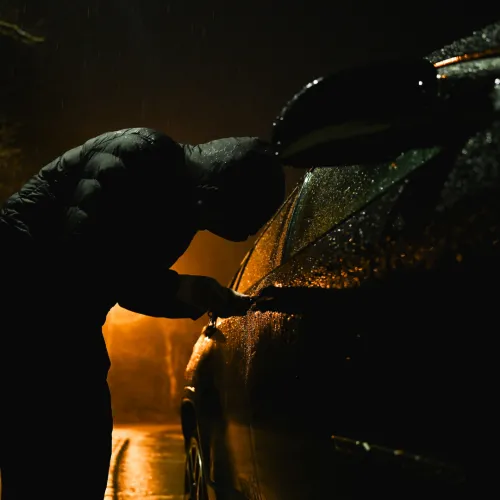
Alberta consistently ranks among the provinces with the highest rates of vehicle theft in Canada. And a significant portion of that activity happens in rural communities where detection is slower and response times are longer.
When a criminal steals a vehicle, it often doesn’t end there. Thieves aren’t always looking to just resell a stolen car. They are using them to commit other crimes, like transporting illegal items or as a getaway vehicle.
Read on to find out more about what happens after a theft occurs and how to prevent your property from being stolen.
A Stolen Vehicle Is a Tool
Vehicle thefts are rarely the end goal. For many thieves, especially those connected to organized networks, a stolen vehicle is the starting point for a string of crimes.
Robberies
Break-ins often involve a stolen vehicle used to arrive, load up, and leave fast. Once the job is done, the vehicle is dumped or sometimes torched to destroy evidence. Investigators are then working two crime scenes instead of one, and the original owner is caught in the middle.
Transportation of Illegal Items
Trucks, vans, and trailers are valuable to criminals who need to transport stolen items, illegal goods such as firearms or drugs, or even victims of trafficking.
Resale and Export
Not every stolen vehicle ends up abandoned on a back road. Some are stripped for parts and sold through sketchy channels. Others are re-identified with cloned VINs and resold. High-end models are frequently shipped to other countries, commonly in the Middle East and West Africa, to be sold for profit to fund criminal organizations.
Joyrides
Some thieves, particularly younger offenders, steal cars for thrill-seeking or simply to get from one location to another before abandoning them. They can be driving erratically, affecting the safety of everyone on the road.
Why Smaller Communities Are Targeted
Thieves do their homework, scoping out properties and vehicles for days or even weeks before a theft occurs. They drive slowly through a neighbourhood, taking note of what's parked where and when. Smaller cities and towns can be attractive targets because the pace is slower, security measures are less consistent, and community members may not think twice about an unfamiliar vehicle parked nearby.
Vehicles left unlocked with keys inside, or parked in poorly lit areas overnight, are the easiest entry points, and not out of the norm for many rural residents. In communities where people know their neighbours and have always felt safe, letting your guard down is natural. Thieves count on that.
Seasonally, theft spikes around long weekends, during busy community events, and in periods when people are away from their homes for extended stretches. It's worth being more diligent about vehicle security during those times.
Steps That Actually Make a Difference to Prevent Vehicle Theft
Take your keys
Even when you're running inside because you forgot your phone or bringing some groceries in, make sure you have your keys with you. Most opportunistic thefts happen in seconds.
Add a secondary deterrent
Steering wheel locks, kill switches, and GPS trackers significantly reduce the appeal of a target vehicle. They want a quick getaway. Anything you can do to make it obvious that you are cutting into their window of time and convenience will help deter them.
Document your vehicle
Photograph it, record the VIN, and note any identifying features on your vehicle or equipment. This will help the police and increase the chances of recovering your vehicle if it is stolen.
Light your parking area
Motion-activated lighting deters both theft and the scouting activity that often precedes it. Also, keep your vehicle parked somewhere you can see when you’re inside.
Report anything suspicious
An unfamiliar vehicle parked, someone you don't recognize taking photos of properties, a truck that keeps circling, should be called in to 310-RCMP. You don't need certainty to report. Let the RCMP decide.
Get connected
RAVE shares real-time information about suspicious activity in your area. If you're not already connected, it's worth signing up.
A single vehicle theft sets off a chain of events that affects more than the owner. It affects the business owner across town whose window was smashed. The family that finds a burning vehicle on the edge of their property. The neighbours who feel like organized crime is encroaching on their community.
Awareness amongst community members is one of the most practical tools available to prevent vehicle theft. When people know what to watch for and feel confident enough to make a report, it becomes much harder for thieves to operate unnoticed.
If your vehicle has been stolen or you have information about suspicious activity in your area, contact the RCMP at 310-RCMP (7267) or your local police’s non-emergency line.

July 06, 2026